Blog

The Growing Demand for Vacuum Heat Treatment in India: An Industry Overview

Vacuum Heat Treatment in India
India’s manufacturing sector is evolving rapidly, driven by advancements in technology, an expanding industrial base, and rising global competitiveness. As industries move toward higher precision, consistency, and superior material performance, the need for advanced heat treatment solutions has become more crucial than ever. Among the modern techniques gaining prominence, vacuum heat treatment has emerged as a preferred choice for manufacturers seeking clean, reliable, and high-performance results.
Whether it’s automotive, aerospace, medical, tooling, or general engineering, the shift from conventional heat treatment processes to more sophisticated, controlled systems has been significant. This transformation is directly fueling the rising demand for vacuum heat treatment services across India.

What Is Vacuum Heat Treatment?

Vacuum heat treatment is a highly specialized process in which metal components are heated inside a furnace operating under vacuum or very low-pressure conditions. The absence of oxygen and reactive gases prevents oxidation, scaling, and contamination—common issues with atmospheric heat treatment.
In contrast to conventional methods, vacuum heat treatment provides superior metallurgical consistency and surface quality. The result is bright, clean, scale-free components with enhanced mechanical properties, making it ideal for industries requiring stringent precision.

Why Demand for Vacuum Heat Treatment Is Rising in India

1. Growing Need for Precision Components As Indian industries transition toward high-performance manufacturing, the demand for dimensionally accurate, defect-free components has grown substantially. Sectors such as aerospace, EV automotive, medical equipment, and tool & die require tight tolerances and flawless finish—something achievable only through vacuum processes.
Vacuum heat treatment eliminates oxidation and ensures minimal distortion, reducing the need for post-processing and improving overall productivity.
2. Global Standards & Export Requirements Indian manufacturers today compete globally. Export-driven industries must comply with international quality and metallurgical standards. Vacuum heat treatment enables manufacturers to meet these standards by offering:
  • Repeatable results
  • Traceable processes
  • Consistent hardness and microstructure
This has made vacuum heat treatment in India a necessity for companies supplying components to global OEMs.
3. Expansion of High-Performance Sectors India’s rapid growth in sectors such as aerospace, defense, medical devices, EV automotive, and advanced engineering is a significant driver of demand. These industries require components that exhibit:
  • High strength
  • Superior wear resistance
  • Excellent fatigue life
Vacuum treatment ensures these characteristics, making it the preferred solution for critical applications. As a result, the requirement for commercial vacuum heat treatment continues to rise across major industrial hubs.
4. Cleaner and More Sustainable Manufacturing With increasing focus on sustainability, industries are embracing processes that reduce environmental impact. Vacuum furnaces operate without harmful gases and emit significantly fewer pollutants compared to atmospheric furnaces.
Their energy-efficient design and clean processing environment make them an important step toward eco-friendly industrial operations.
5. Alignment with the Make-in-India Vision The push for local manufacturing and self-reliance has led many OEMs to invest in advanced processes within India itself. As a result, demand for domestic vacuum heat treatment services has surged.
Large and mid-sized manufacturers now prefer to partner with reliable heat treatment experts to ensure world-class quality for domestically produced components.

Key Benefits Driving Market Growth

Several advantages explain why vacuum heat treatment has become essential in modern manufacturing:
  • Bright, clean, oxidation-free surfaces requiring no post-cleaning
  • Uniform temperature distribution, ideal for precision components
  • Improved hardness, strength, and toughness
  • Minimized distortion, enhancing component performance
  • Reduced rework and rejection rates
  • High repeatability, making it ideal for commercial-scale production
These performance benefits have encouraged manufacturers across India to transition from conventional heat treatment to vacuum-based processes.

Industries Increasingly Relying on Vacuum Heat Treatment

The technology is now widely adopted across:
  • Automotive & EV – gears, cams, shafts, drivetrain components
  • Aerospace & defence – engine parts, landing gear, structural components
  • Medical equipment – surgical tools, implants, precision instruments
  • Tool & die industry – punches, dies, cutting and forming tools
  • General engineering & heavy machinery
  • Electronics & semiconductor components
Each of these sectors benefits from the precision, cleanliness, and superior metallurgical results offered by vacuum processing.

Key Differences Between Vacuum & Conventional Heat Treatment

  1. Atmosphere Control


    Vacuum furnaces eliminate oxygen, preventing oxidation and scaling. In contrast, conventional heat treatment exposes components to air or gas atmospheres, resulting in surface contamination.
  2. Surface Quality


    Vacuum heat treatment delivers bright, clean, and scale-free surfaces, ready for assembly or application. Conventional methods typically leave dark, flaky surfaces that require additional cleaning.
  3. Metallurgical Precision


    Vacuum-treated parts benefit from uniform temperature distribution and enhanced microstructural stability. Conventional furnaces often show temperature variations, affecting quality and consistency.
  4. Repeatability


    Vacuum heat treatment allows for precise automation and data-controlled cycles, ensuring consistent results across batches—ideal for commercial vacuum heat treatment operations.
  5. Environmental Impact


    Vacuum systems generate minimal pollution and require no reactive gases. Conventional systems, however, release emissions and require strict monitoring.
  6. Cost Efficiency


    Although vacuum furnaces involve higher initial investment, they reduce costs in the long run by eliminating rework, minimizing post-process finishing, and lowering rejection rates.

Growth of Commercial Vacuum Heat Treatment in India

Many companies now outsource their heat treatment to specialized commercial providers instead of investing in costly in-house infrastructure. This trend has grown because commercial facilities offer:
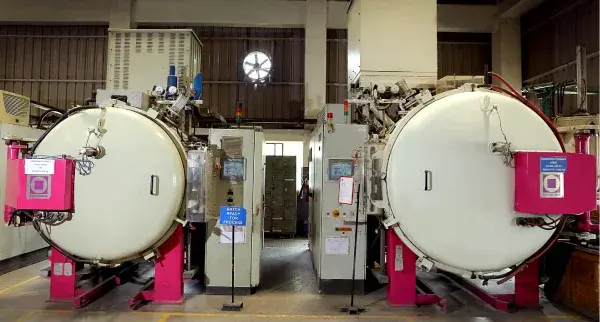
  • Advanced multi-chamber and high-pressure vacuum furnaces
  • Automated systems ensuring consistency
  • Experienced metallurgists and technicians
  • Faster turnaround times across multiple locations
The expansion of commercial plants in Pune, Bangalore, Chennai, and other industrial zones highlights the rising national demand.

Challenges and Opportunities

Challenges
  • High capital cost of vacuum furnaces
  • Need for skilled manpower
  • Limited awareness among MSMEs
Opportunities
  • Increasing export-oriented manufacturing
  • Growth of EV, aerospace, and defence sectors
  • Adoption of Industry 4.0 automation in furnaces
  • Expansion of multi-location service networks
OpportunitiesIndia is uniquely positioned to emerge as a global leader in specialized heat treatment services.

The Future of Vacuum Heat Treatment in India

The future is promising. Demand will continue to rise as industries transition to high-performance materials, automation, and global-standard manufacturing. With improved technology, expanding service networks, and increasing customer awareness,vacuum heat treatment in India is set for rapid growth.

Conclusion

The shift toward advanced, sustainable, and precision-driven manufacturing has significantly increased the need for vacuum heat treatment. As industries prioritize quality, consistency, and durability, vacuum technology has become essential for achieving world-class metallurgical performance. With growing acceptance across sectors and the rise of commercial vacuum heat treatment providers, India is on the path to becoming a major hub for advanced heat treatment services.