Blog

Why Choose Vacuum Heat Treatment Over Conventional Heat Treatment?

Vacuum Heat Treatment
Heat treatment plays a crucial role in enhancing the strength, durability, and performance of metal components across almost every engineering industry. Traditionally, manufacturers relied on atmospheric or conventional heat treatment methods to achieve hardness and microstructural improvements. However, as industries move toward higher precision and quality consistency, the limitations of conventional processes have become more evident. This shift has led to growing interest in vacuum heat treatment—a cleaner, more controlled, and technologically advanced method that delivers superior results.
Today, the demand for vacuum heat treatment services is rising rapidly, especially in sectors such as aerospace, automotive, medical, tooling, and high-precision engineering. This trend is strong not only globally but also within India, where the need for international-quality components has driven many manufacturers to invest in, or outsource to, experts offering vacuum heat treatment in India .

What Is Vacuum Heat Treatment?

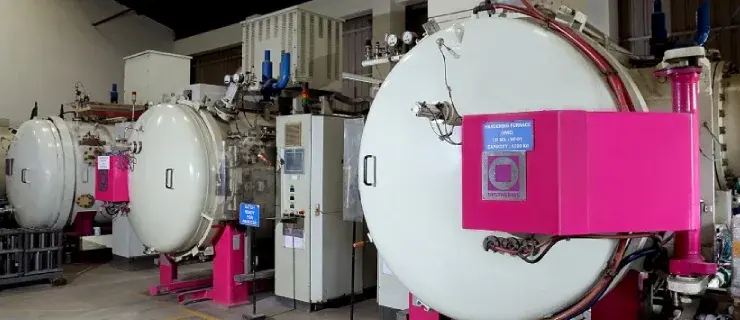
Vacuum heat treatment is a specialized process carried out inside furnaces where the air is removed to create a vacuum-controlled environment. By eliminating oxygen and other reactive gases, the process prevents oxidation, scaling, and contamination—common issues in conventional heat treatment. This controlled environment ensures precise temperature uniformity and improved metallurgical stability, making the process extremely popular for high-value and high-performance components.
In industrial operations, commercial vacuum heat treatment provides mass-scale, highly repeatable heat treatment cycles suitable for OEMs and large manufacturers aiming for consistent quality output.

What Is Conventional Heat Treatment?

Conventional or atmospheric heat treatment relies on furnaces that operate in the presence of air or with a gas atmosphere. While effective for many applications, these systems come with significant drawbacks:
  • Oxidation and scaling on the component surface
  • Risk of decarburization
  • Inconsistent furnace conditions
  • Additional post-processing such as machining or polishing
  • Increased rejection rates for precision components
Industries requiring flawless finishes and precise tolerances often find conventional methods inadequate, especially for complex or high-value alloys.

Key Differences Between Vacuum & Conventional Heat Treatment

  1. Atmosphere Control


    Vacuum furnaces eliminate oxygen, preventing oxidation and scaling. In contrast, conventional heat treatment exposes components to air or gas atmospheres, resulting in surface contamination.
  2. Surface Quality


    Vacuum heat treatment delivers bright, clean, and scale-free surfaces, ready for assembly or application. Conventional methods typically leave dark, flaky surfaces that require additional cleaning.
  3. Metallurgical Precision


    Vacuum-treated parts benefit from uniform temperature distribution and enhanced microstructural stability. Conventional furnaces often show temperature variations, affecting quality and consistency.
  4. Repeatability


    Vacuum heat treatment allows for precise automation and data-controlled cycles, ensuring consistent results across batches—ideal for commercial vacuum heat treatment operations.
  5. Environmental Impact


    Vacuum systems generate minimal pollution and require no reactive gases. Conventional systems, however, release emissions and require strict monitoring.
  6. Cost Efficiency


    Although vacuum furnaces involve higher initial investment, they reduce costs in the long run by eliminating rework, minimizing post-process finishing, and lowering rejection rates.

Advantages of Vacuum Heat Treatment

  • No Oxidation or Scaling


    Eliminates surface contamination, improves overall finish quality, and reduces post-processing.
  • Improved Dimensional Stability
    Suitable for components requiring tight tolerances, such as aerospace and medical parts.
  • Enhanced Strength and Hardness
    Controlled atmospheres allow predictable and optimized metallurgical transformations.
  • Higher Repeatability
    Critical industries prefer vacuum furnaces for consistent batch processing.
  • Clean, Bright Surface Finish
    No need for grinding or polishing after treatment, saving significant time and cost.
  • Reduced Rework and Higher Productivity
    Less material waste and fewer rejections make vacuum heat treatment ideal for large-volume production.

Industry Applications Where Vacuum Heat Treatment Excels

  • Aerospace: turbine blades, engine components, landing gear
  • Automotive: gears, shafts, drivetrain components
  • Medical: surgical tools, implants, precision devices
  • Tool & Die: punches, dies, molds, cutting tools
  • General Engineering: high-performance alloys and components for industrial machinery.
Manufacturers looking for durability, precision, and consistency increasingly rely on vacuum heat treatment services for mission-critical applications.

Why Indian Manufacturers Are Shifting to Vacuum Heat Treatment

The demand for vacuum heat treatment in India has grown rapidly due to:
  • Rising global export expectations
  • Need for higher quality and improved metallurgical performance
  • Adoption of international standards by Indian OEMs
  • Increased focus on clean, sustainable manufacturing
  • The growth of industries like EV automotive, aerospace, and medical devices
Large-scale manufacturers now prefer commercial vacuum heat treatment partners to ensure uniform results across high-volume production.

When Should You Choose Vacuum Heat Treatment?

Vacuum heat treatment is the right choice when:
  • Surface finish and cleanliness are crucial
  • Oxidation must be avoided
  • Dimensional accuracy is non-negotiable
  • Components are made from expensive or specialty alloys
  • Consistency and repeatability are required for large-scale production
Large-scale manufacturers now prefer commercial vacuum heat treatment partners to ensure uniform results across high-volume production.

Conclusion

Vacuum heat treatment has transformed the modern manufacturing landscape by offering precision, cleanliness, high repeatability, and exceptional metallurgical control. Compared to conventional heat treatment, it eliminates oxidation, improves consistency, enhances surface finish, and drastically reduces post-processing costs. For industries demanding the highest levels of accuracy and durability, choosing reliable vacuum heat treatment services —especially from trusted providers offering commercial vacuum heat treatment—ensures superior performance and long-term reliability.